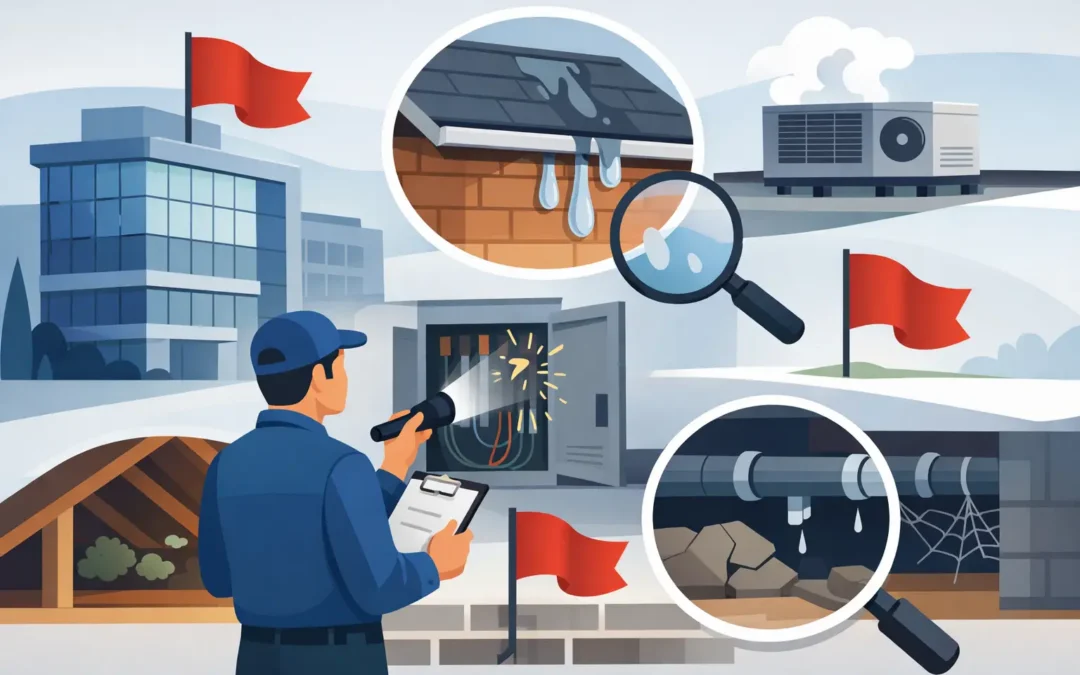
A commercial building can look well maintained from the street and still carry problems that affect operations, tenant relationships, financing, and long-term ownership. The top commercial property inspection red flags are rarely limited to one obvious defect. More often, they are patterns: recurring moisture, aging equipment with no service history, repairs that hide rather than solve a problem, or areas that have been difficult to access and easy to overlook.
For Idaho buyers, investors, and property owners, a commercial inspection provides a practical picture of the property’s visible condition. It helps you ask better questions before a purchase, lease decision, or major repair. The goal is not to create alarm over every worn component. It is to separate normal maintenance from conditions that deserve further review.
Water Intrusion and Drainage Problems
Water is one of the most costly concerns in commercial properties because it can affect several systems at once. Staining on ceiling tiles, peeling wall finishes, soft drywall, swollen baseboards, or a persistent musty smell may point to an active or past moisture issue. A single stain does not always mean there is a current leak, but its location, appearance, and surrounding materials matter.
Exterior drainage deserves the same attention. Ponding near the foundation, downspouts that discharge too close to the building, deteriorated sealant around penetrations, and damaged gutters can all direct water where it does not belong. In properties with flat or low-slope roofs, standing water and patched roof surfaces should prompt a closer look at the roof’s condition and maintenance history.
Moisture can also create a health-related concern. Visible fungal growth, water-damaged materials, and ongoing humidity issues may require a focused mold evaluation. The right next step depends on the source, the extent of the affected area, and whether the condition appears active.
Top Commercial Property Inspection Red Flags on the Roof
Commercial roofs often stay out of sight until a leak disrupts business. That makes roof condition especially significant during due diligence. Missing or loose material, open seams, cracked flashing, worn membrane areas, damaged roof drains, and repeated patching are all signs that a roof may need more than routine attention.
Age alone does not tell the whole story. A well-maintained older roof can still perform reliably, while a newer roof with poor drainage or neglected repairs can develop early failures. Service records, warranty information, and evidence of regular maintenance help place visible findings in context.
Pay attention to what is below the roof as well. Stained insulation, damaged ceiling finishes, corrosion around rooftop equipment, and water marks around penetrations can reveal a problem that is not obvious from the roof surface. If access is limited or the roof condition raises questions, a specialized roof assessment may be appropriate before you move forward.
Electrical Systems That Raise Questions
Electrical concerns can affect safety, capacity, and a building’s ability to support current operations. During an inspection, visible signs such as corrosion in panels, damaged covers, exposed wiring, overheating marks, improperly labeled breakers, or improvised extensions deserve attention.
Capacity is just as important as condition. A building that once housed light retail use may not have the electrical support needed for a restaurant, medical office, workshop, or other equipment-heavy tenant. Electrical panels, service equipment, and visible distribution components should be considered alongside the intended use of the space.
An inspection can identify visible concerns and help determine when a qualified electrical professional should evaluate the system further. That additional step is especially wise when equipment appears altered, service records are unavailable, or future operations will place higher demands on the property.
Heating, Cooling, and Ventilation Concerns
Commercial heating and cooling equipment is a major operational expense when it is near the end of its service life or showing signs of unreliable performance. Rust, damaged insulation, blocked condensate drains, unusual noise, dirty filters, disconnected ductwork, and inactive equipment can all signal deferred maintenance.
Ask how the system performs across the building, not just in the area being toured. Uneven temperatures, strong odors, excessive humidity, and rooms that rely on portable units may indicate distribution or ventilation problems. In tenant-occupied spaces, these details can affect comfort and retention.
Maintenance documentation is useful here. It may show whether equipment has been regularly serviced, repeatedly repaired, or left unattended. A commercial inspection should make visible concerns easier to understand, while equipment specialists can provide further evaluation when needed.
Structural Movement and Exterior Wear
Cracks are common in many buildings, and not every crack signals a serious structural issue. The concern grows when cracks are wide, uneven, expanding, or accompanied by sloping floors, sticking doors, separated trim, or gaps around windows and exterior walls. These conditions can suggest movement that deserves additional review.
Outside the building, look for deteriorated siding, masonry damage, rotted trim, loose handrails, settling walkways, and damaged stairs. These issues may appear cosmetic at first, but they can allow water intrusion or create safety concerns for occupants and visitors.
Parking areas also matter. Large cracks, surface failure, poor drainage, damaged curbs, and trip hazards can affect the property’s day-to-day usability. For a commercial site, the condition of access routes and common areas is part of the overall investment picture, not an afterthought.
Signs of Deferred Maintenance
One neglected item may be manageable. Several neglected systems at once are a red flag because they can point to a broader pattern of delayed upkeep. Temporary-looking repairs, mismatched materials, missing access covers, disconnected components, and accumulated debris in mechanical areas are examples worth documenting.
Deferred maintenance does not automatically mean a property is a poor choice. It does mean the buyer should understand what is visible, what may need prompt attention, and what questions remain unanswered. A clear inspection report helps turn scattered observations into an organized decision-making tool.
This is also where access matters. Locked utility rooms, blocked crawl spaces, inaccessible roof areas, or storage-filled mechanical rooms can limit what an inspector can observe. When significant areas cannot be inspected, treat that limitation as meaningful information rather than a minor footnote.
Environmental and Indoor Air Clues
Commercial properties can contain indoor conditions that deserve closer attention, particularly in older buildings, formerly industrial spaces, or areas with a history of leaks. Persistent odors, visible staining, peeling finishes, damp materials, and ventilation concerns should not be dismissed simply because the space has been cleaned or recently painted.
The property’s past use can also shape the next questions. A warehouse, salon, auto-related facility, medical space, or building with long-term moisture exposure may call for targeted evaluation beyond a general inspection. The right scope depends on the building’s history and the visible evidence at the time of inspection.
How to Respond to Commercial Inspection Findings
The most useful response is calm, documented, and specific. Review the report’s summary first, then read the supporting details and photographs. Focus on conditions that affect safety, water management, major systems, building performance, or your planned use of the property.
From there, decide which findings need a specialist’s opinion, which repairs should be addressed before closing, and which items belong in a future maintenance plan. A seller may have records that clarify a repair history. A buyer may need additional evaluation before making a final decision. Either way, clear information puts you in a stronger position.
A thorough commercial inspection does not replace every specialty assessment, and it should not promise certainty where access or visible conditions are limited. What it should provide is an honest, easy-to-follow view of the building as it stands. Summit Inspections helps clients turn that information into practical next steps, so a property decision feels informed rather than rushed.