
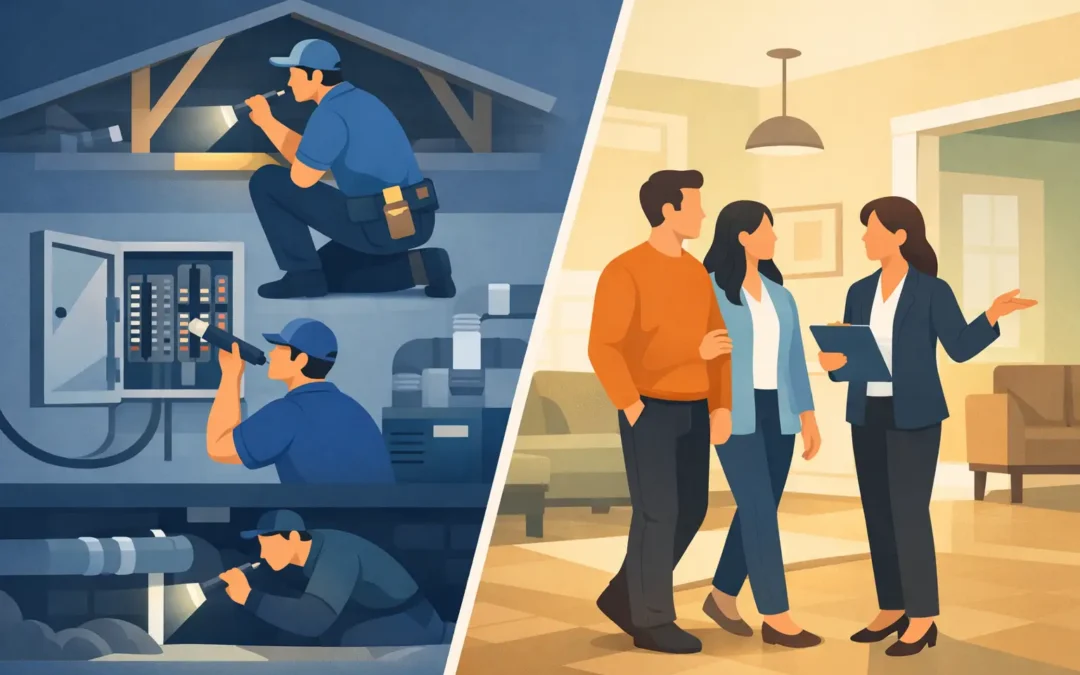
A home inspection versus walkthrough is not an either-or decision for most buyers. These are two separate steps with different purposes, and each can protect you from a different kind of surprise. One helps you understand the property’s overall condition before you move forward. The other helps confirm that the home is in the expected condition shortly before closing.
Confusion often starts because both involve walking through the same house. But the level of detail, timing, and documentation are very different. Knowing where each fits in your transaction can help you ask better questions, follow up on concerns, and make decisions with more confidence.
What a Home Inspection Is Designed to Do
A home inspection is a detailed visual evaluation of a property’s readily accessible systems and components. It is generally completed after a buyer has an accepted offer and before major transaction deadlines. The inspector looks beyond fresh paint, staged furniture, and a tidy kitchen to assess the visible condition of the home.
During a full inspection, the focus may include the roof, exterior, foundation, structural components, heating and cooling equipment, plumbing, electrical components, attic, insulation, interior rooms, doors, windows, and crawl space when accessible. The goal is not to make the home seem perfect or imperfect. It is to give you a clear picture of what is present, what needs attention, and what may require further evaluation.
A quality report matters because you will be handling a lot of information at once. Easy-to-read, full-color reports with photos and a clear summary help you focus on the findings that deserve prompt attention without losing sight of routine maintenance items.
An Inspection Looks for Conditions You May Not See
Some concerns are easy to spot during a casual visit, such as damaged flooring or a broken cabinet door. Others are less obvious. Moisture staining in an attic, signs of a past leak in a crawl space, an aging water heater, or an electrical concern may not stand out to someone who is focused on room sizes and moving plans.
That is why an inspection is especially valuable for first-time buyers, investors purchasing from a distance, and anyone buying an older home. It provides a professional assessment that supports informed conversations with your real estate team and the seller.
An inspection also has limits. It is visual and noninvasive, meaning an inspector does not open walls, move belongings, or predict exactly when a component will fail. If the inspection identifies a concern outside its scope, the appropriate next step may be a qualified specialist or a focused inspection of a specific area.
What a Final Walkthrough Is Designed to Do
A final walkthrough usually occurs close to closing, after the seller has moved out or nearly completed the move. It is not another full inspection. Think of it as a confirmation that the property is substantially in the condition you expect to receive.
At this point, the questions are practical. Are agreed-upon items still in the home? Have requested repairs been completed? Is there new damage from the move-out process? Do the lights, faucets, toilets, appliances, garage door, and heating or cooling equipment appear to be operating as expected?
The walkthrough can be brief, but it should never be rushed. A home that looked fine weeks earlier can change quickly if a pipe leaks, a storm causes damage, or a repair was not completed as expected. It is your opportunity to identify visible changes before the transaction is finalized.
A Walkthrough Is Not a Substitute for an Inspection
The most common mistake is treating the final walkthrough as a chance to inspect the house from scratch. By then, there may be very little time to investigate a major concern, obtain records, or decide how to proceed.
A walkthrough also does not normally include a detailed assessment of the roof, attic, crawl space, foundation, or concealed systems. You may notice an issue in those areas, but the walkthrough is not designed to provide the same depth or written documentation as a professional inspection.
If you are concerned about a specific area after the original inspection, such as the attic, crawl space, or potential mold conditions, it is usually better to address it early. A partial inspection or targeted evaluation can give you more useful answers than trying to resolve a question at the last minute.
Home Inspection Versus Walkthrough at a Glance
The clearest difference between a home inspection versus walkthrough is the purpose. An inspection helps you evaluate the property before you commit to the next steps. A walkthrough helps you verify that the property has not materially changed before you take ownership.
An inspection is typically performed by a certified, insured inspector and results in a detailed report. A walkthrough is commonly attended by the buyer and real estate professionals, and its findings may be documented with notes, photos, or a checklist as needed.
The inspection is about condition, risk, maintenance, and visible defects. The walkthrough is about confirmation: the agreed-upon property, repairs, and fixtures should be present and appear consistent with what you expect.
Both steps work best when you stay organized. Keep your inspection report available, along with repair agreements, invoices, receipts, and any written details about items that were expected to remain with the home.
How Buyers Can Use Both Steps Well
Start with the inspection report. Read the summary first, then review the photos and full findings. Separate major concerns from normal upkeep so you can prioritize questions and next steps. If anything is unclear, ask the inspector to explain it in plain language. You should understand what was observed, why it matters, and what action may make sense.
If repairs are agreed upon, keep the details specific. A vague promise that something will be “taken care of” can create confusion later. Written records and clear descriptions make the final walkthrough more productive because you know exactly what you are checking.
During the walkthrough, bring the inspection summary and repair documentation. Check the areas connected to prior concerns, but also look for fresh issues. Open and close doors and windows, run water briefly, flush toilets, test accessible lights, and inspect rooms, storage spaces, and the garage after belongings have been removed. If an included appliance is present, verify that it is still there and appears to function normally.
If you discover something unexpected, raise it promptly with your real estate professional. The right response depends on the issue. A minor scuff may be handled differently than active water damage or a major missing item. The key is to identify the condition while there is still time to discuss it.
What Sellers Should Understand
Sellers benefit from understanding this distinction, too. A pre-listing inspection can reveal visible concerns before buyers begin asking questions. This gives you time to address issues, gather documentation, or simply prepare for a straightforward conversation about the home’s condition.
Before the final walkthrough, leave the property clean, remove personal belongings, and make sure agreed-upon items remain. If work was completed after the buyer’s inspection, organize the related records. Clear documentation helps demonstrate that the requested work was addressed and can prevent avoidable uncertainty.
Sellers should also avoid assuming a walkthrough is only a formality. It is a meaningful final check for the buyer. A home that is presented carefully and consistently helps the transaction finish on a stronger note.
When a Follow-Up Inspection Makes Sense
Sometimes a final walkthrough reveals a concern that deserves more than a quick look. This may happen when a repair appears incomplete, a previously dry area now shows moisture, an appliance is not operating, or a new issue affects an area that was accessible during the original inspection.
A follow-up inspection can be useful when you need independent confirmation of visible conditions or want documentation after repairs. It is also a practical option when a buyer needs a specific area revisited rather than another full inspection. Summit Inspections can help clients understand what type of evaluation fits the question at hand, without making the process harder than it needs to be.
The best approach is simple: use the inspection to understand the home, and use the walkthrough to confirm the home you are receiving. Give both steps the attention they deserve, ask direct questions when something does not look right, and keep your documents close until the transaction is complete.