A home inspection moves fast. You are walking room to room, trying to absorb details about the roof, electrical system, attic, crawl space, grading, windows, and signs of moisture – all while thinking about a major financial decision. That is why knowing the best questions for home inspector conversations before the appointment matters. The right questions help you get clear answers, focus on real risks, and leave with a better sense of what needs attention now versus later.
For buyers, sellers, and property owners, the goal is not to turn the inspection into a construction seminar. It is to understand the condition of the property in plain language. A good inspector should be able to explain what they are seeing, why it matters, and what kind of follow-up may make sense.
Why the best questions for home inspector visits matter
Many people assume the report will answer everything. A strong report is essential, but the conversation during and after the inspection is just as valuable. It gives you context that a photo or short written note cannot always capture.
For example, two issues can look similar on paper but carry very different weight in real life. One may be routine maintenance. Another may suggest ongoing moisture intrusion, deferred upkeep, or a larger repair path ahead. Asking smart questions helps you understand that difference.
It also helps keep emotions in check. Almost every property has findings. The important part is learning which items are common, which are more urgent, and which deserve specialist review.
Start with the big picture
Before you get into specific systems, ask a broad question: What are your biggest concerns with this property?
This is often the most useful place to begin because it helps the inspector prioritize the discussion. Instead of getting lost in minor defects, you immediately hear what stands out most. That may include moisture in a crawl space, signs of roof wear, unsafe electrical conditions, poor drainage, or ventilation problems in the attic.
A related question is: If this were your purchase, what would you look into further first?
That phrasing tends to bring out a practical answer. It moves beyond technical observations and gets to decision-making. Not every note in a report should carry the same weight, and this question helps sort that out.
Ask about safety, water, and structural concerns first
If you only remember a few topics, focus on the issues that can affect safety, long-term damage, or habitability. Ask: Do you see any safety concerns that should be addressed right away?
This helps identify active hazards such as exposed wiring, unstable steps or railings, combustion concerns, or other conditions that deserve prompt attention. You are not just asking what is wrong. You are asking what matters now.
Next, ask: Do you see signs of water intrusion, drainage problems, or moisture damage?
Water is one of the most costly and persistent property issues. It can show up as staining, damp materials, musty odors, mold-like growth, soft finishes, poor grading, plumbing leaks, or condensation in vulnerable areas. Idaho homes can also face seasonal moisture patterns that make drainage and ventilation especially important.
Then ask: Are there any structural concerns or signs of movement?
This does not mean every crack is a major problem. Many homes show minor settling over time. The value of the question is hearing whether the inspector sees a cosmetic issue, a common condition, or something that should be reviewed more closely.
Get clear on the roof, attic, and crawl space
Some of the most important conditions are easy to miss because they are above you or below you. Ask: What did you see on the roof, and how much life does it appear to have left?
No inspector can predict the exact remaining lifespan of every roof, and it depends on materials, exposure, installation quality, and maintenance. Still, an experienced inspector can usually tell you whether the roof appears to be in solid condition, showing moderate wear, or nearing the point where repair or replacement planning is wise.
Follow that with: Did you find any concerns in the attic or crawl space?
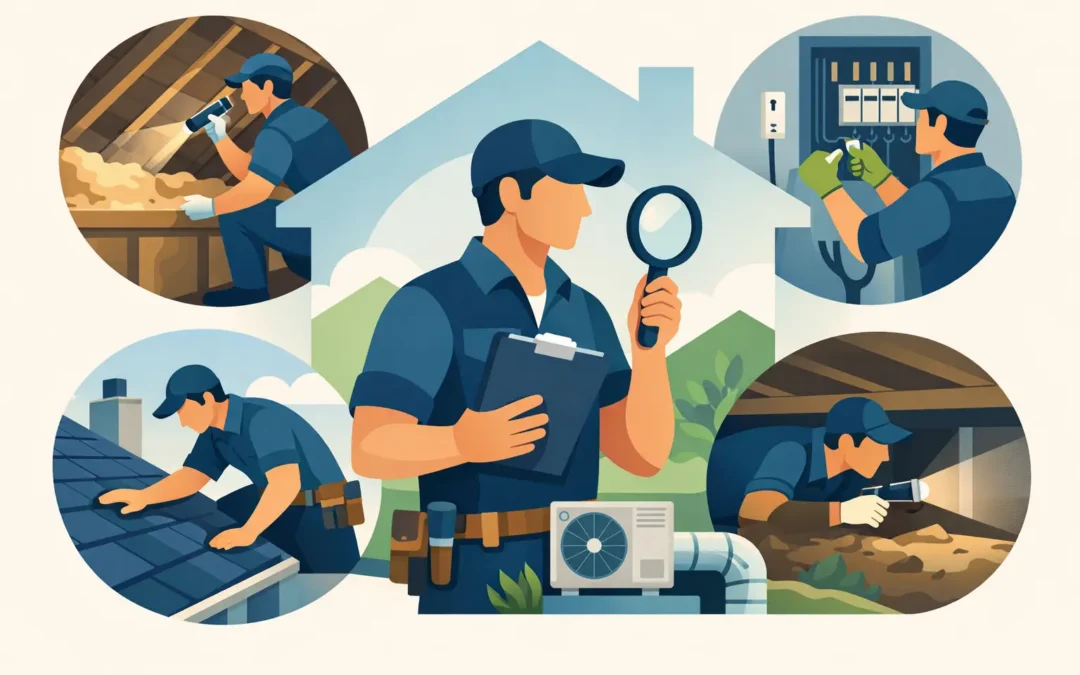
These areas often reveal patterns the finished living space hides. In the attic, that may include staining, past leaks, poor ventilation, insulation concerns, or signs of bathroom fans exhausting into the wrong place. In the crawl space, the inspector may spot standing water, moisture staining, wood damage, insulation issues, or duct concerns. If there is one area many owners never see for themselves, it is the crawl space – so this is worth asking every time.
Understand the major systems in plain language
Buyers often feel uneasy around electrical, plumbing, and HVAC findings because the terms can sound more serious than they are. Ask: Can you explain the main system concerns in simple terms?
That question gives the inspector permission to translate. You should walk away understanding whether a system issue is mostly maintenance, a repair item, a performance problem, or a safety concern.
It also helps to ask: Which systems appear to be functioning as expected, and which ones need closer attention?
This creates balance. A good inspection is not only a list of defects. It is also a condition assessment. Knowing what appears serviceable can help you make decisions with more confidence.
If heating and cooling are especially important to you, ask whether the system showed any signs of limited performance, age-related wear, or deferred maintenance. The same goes for plumbing if the home has older supply or drain materials.
Ask questions that help with decision-making
The best questions for home inspector discussions are not only about defects. They also help you decide what to do next. Ask: What should I address immediately, what should I budget for soon, and what can be monitored over time?
That one question can organize the entire inspection in a practical way. It separates urgent needs from future planning. It also helps first-time buyers avoid feeling overwhelmed by a long report.
Another strong question is: Which findings typically lead buyers or owners to seek a specialist?
Sometimes an inspector will recommend further review by a roofing contractor, electrician, plumber, HVAC professional, or mold specialist. That does not always mean the issue is severe. It often means the next step requires a more invasive evaluation, repair design, or indoor air and moisture assessment.
If mold or musty odors are a concern, be direct. Ask what signs were observed, where moisture may be coming from, and whether testing or remediation should be considered. Clear answers matter here because health concerns and hidden moisture can affect both the property and the people living in it.
Do not forget maintenance questions
Not every useful question is about damage. Ask: What maintenance items would help protect this home going forward?
This is especially helpful for first-time buyers and out-of-area investors. Homes need regular attention, and small maintenance steps often prevent larger issues later. An inspector may point to cleaning gutters, improving grading, servicing HVAC equipment, managing humidity, sealing vulnerable exterior gaps, or keeping crawl space and attic conditions under control.
You can also ask: What signs should I watch for after I move in?
That question turns the inspection into a roadmap. Instead of treating the report as a one-time document, you begin to understand how to monitor the property over time.
How to ask better questions during the inspection
Timing matters. If you are present, it helps to save detailed questions for natural pauses rather than asking continuously while the inspector is testing systems or taking notes. Most inspectors are happy to explain findings, but they also need space to inspect thoroughly.
It is also smart to ask for examples. If the inspector mentions moisture staining, roof wear, or settlement, ask them to show you what they are seeing. A visual explanation usually makes the issue much easier to understand.
Finally, pay attention to how the answer is framed. Good inspectors avoid alarmist language unless a condition truly calls for it. They should be clear, calm, and specific about what was observed and what follow-up makes sense.
The questions that give you the most value
If you want to keep it simple, focus on these five during any inspection: What are the biggest concerns, are there any immediate safety issues, do you see signs of water or moisture problems, what needs attention now versus later, and what should be evaluated further by a specialist.
Those questions cut through the noise. They help you understand the property without getting buried in technical wording. They also make the inspection feel less like a checklist and more like a conversation built around your decision.
At Summit Inspections, that kind of clarity matters because people make better choices when they know what they are looking at and what steps come next. The best inspection questions do not just help you hear more. They help you understand more, which is what turns a report into something you can actually use.
If you are heading into an inspection soon, bring your questions with you, ask them early, and do not be afraid to ask for plain-English answers. A good inspector will welcome that conversation.