When a property decision is moving fast, the question often is not whether to get an inspection. It is whether you need a full inspection versus partial inspection. That choice can affect how much you learn about the property, how confident you feel moving forward, and how well you can plan for repairs, maintenance, or negotiations.
A lot of buyers and sellers start with the same assumption: if one concern stands out, a limited inspection should be enough. Sometimes that is true. But sometimes a visible issue in one area points to bigger patterns elsewhere in the home or building. The right option depends on your goal, the age and condition of the property, and how much uncertainty you are willing to carry.
What full inspection versus partial inspection really means
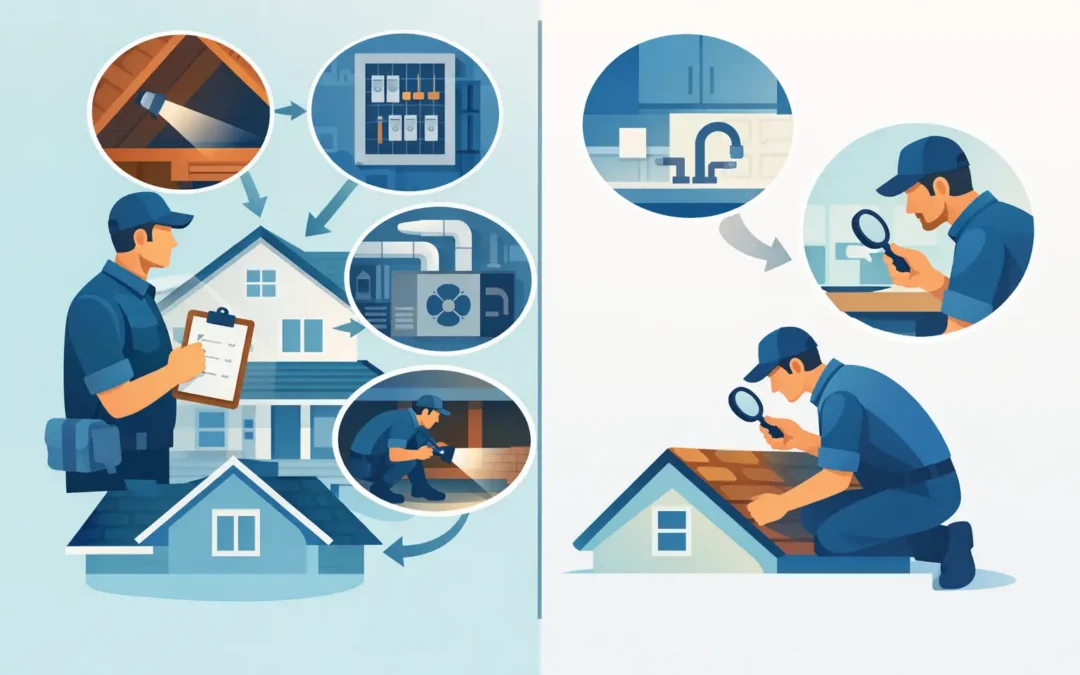
A full inspection is a broad evaluation of the property’s major accessible systems and components. For a home, that usually means looking at the roof, exterior, attic, insulation, interior, foundation, structure, plumbing, electrical, heating and cooling, and other visible elements that affect condition and function. The goal is to give you a more complete picture of how the property is performing as a whole.
A partial inspection is narrower. It focuses on a specific concern or area, such as a crawl space, attic, roof area, moisture issue, or signs of mold. Instead of reviewing the entire property, the inspector concentrates on the part of the building you are most concerned about.
Neither approach is automatically better. The better choice is the one that fits the decision you need to make.
When a full inspection makes the most sense
If you are buying a property and want a reliable understanding of its overall condition, a full inspection is usually the stronger option. A real estate transaction involves more than one visible issue. Even when the kitchen looks updated and the home shows well, important concerns can still exist in the attic, under the house, at the electrical panel, or around drainage and moisture.
For first-time buyers, a full inspection often provides peace of mind because it answers the questions they do not yet know to ask. For experienced buyers and investors, it creates a clearer record of current condition so they can make decisions with fewer surprises.
A full inspection also tends to make sense for sellers before listing. If the goal is to reduce last-minute issues during a transaction, broad visibility matters. Finding one roof concern is helpful, but identifying several smaller items across the property can be even more valuable because it gives you time to address them on your terms.
Commercial stakeholders can benefit for the same reason. When multiple systems interact, a narrow look at one issue may not reveal the larger maintenance picture. A full inspection gives more context for planning and documenting condition.
When a partial inspection is the right call
A partial inspection can be a smart choice when the concern is specific and well-defined. If you have staining on a ceiling and want to evaluate the attic and roof area, or if you suspect a crawl space moisture problem and need that area assessed, a partial inspection can provide focused answers without reviewing the entire property.
This option often works well for current homeowners who are not in the middle of a sale but want clarity on one problem before deciding on next steps. It can also help sellers who already know a buyer has concerns about one area and want better information before responding.
In some cases, a partial inspection is useful after a previous inspection has already been completed. If the larger property has already been reviewed and a follow-up look is needed in one area, a targeted inspection can be the practical next step.
The key is being honest about the scope of the question. If the issue truly seems isolated, a partial inspection may be enough. If there is a chance that the concern connects to ventilation, drainage, structure, or multiple systems, a fuller review may save time and stress.
Coverage is the biggest difference
The most important difference in full inspection versus partial inspection is not the format on paper. It is the amount of risk each option leaves on the table.
A full inspection reduces blind spots because it looks across the property. That matters when defects are unrelated to the concern you first noticed. A buyer may call about an attic stain, for example, but the more serious issue may turn out to be poor grading, crawl space moisture, or aging electrical components in another area.
A partial inspection gives depth in one place, but it does not promise a full-property perspective. That is not a weakness if your needs are narrow and clear. It becomes a limitation only when people expect a targeted inspection to answer questions it was never meant to cover.
That is why clear communication matters before the inspection begins. You want to understand exactly what will be inspected, what will not, and what kind of decisions the report will help you make.
How to decide which inspection fits your situation
Start with the purpose of the inspection. If you are making a major purchase, preparing to list, or trying to understand the property as a whole, a full inspection is usually the safer choice. It gives you a broader base of information and can help prevent overlooked issues.
If your purpose is narrow, such as evaluating possible mold in one area or checking a crawl space after a moisture concern, a partial inspection may be more appropriate. It keeps the focus where you need it.
Then consider the property itself. Older homes, properties with deferred maintenance, and buildings with a history of moisture problems often benefit from a full inspection even when the initial concern seems limited. Newer or well-documented properties may sometimes justify a more targeted approach, especially if there has already been a recent broader review.
Your tolerance for uncertainty matters too. Some clients are comfortable addressing one issue at a time. Others want a wider understanding before making any decision. Neither mindset is wrong, but it should shape the inspection choice.
Reporting and next steps matter as much as scope
An inspection is only helpful if the findings are clear. Whether you choose a full inspection or a partial one, the value comes from understanding what was observed, why it matters, and what to do next.
That is especially important for buyers and sellers who are already balancing contracts, schedules, and moving parts. A report should not leave you sorting through technical language just to figure out whether an issue is minor, urgent, or worth monitoring.
This is where a straightforward process makes a difference. Summit Inspections focuses on easy-to-read, full-color reports with a clear summary so clients can quickly understand the condition of the property and make informed decisions. That kind of reporting is useful for any inspection type, but it becomes especially valuable when a targeted concern may or may not point to a larger problem.
Common mistakes people make
One common mistake is choosing a partial inspection because it feels simpler, even when the property decision is not simple. If you are under contract on a home, limiting the inspection too much can leave major questions unanswered.
Another mistake is assuming a full inspection will automatically answer every specialized concern in detail. A full inspection is broad, but if there is a specific issue such as suspected mold, it may still make sense to request a focused inspection related to that condition.
People also sometimes wait too long to ask what is included. That can lead to mismatched expectations. A good inspection experience starts before the appointment, with a clear conversation about your concerns, the property’s history, and what kind of information you need from the report.
The best choice is the one that matches the decision
Full inspection versus partial inspection is really a question about confidence. How much of the property do you need to understand before you move forward, respond to a concern, or make a repair plan?
If the stakes are broad, the inspection should usually be broad too. If the concern is specific and isolated, a partial inspection can be efficient and practical. The right choice is not about getting the biggest service possible. It is about getting the right information for the decision in front of you.
If you are unsure, ask for guidance based on your situation rather than guessing. A good inspector will help you narrow the scope when that makes sense and recommend a fuller review when the risk of missing something is too high. That kind of clarity can make the entire process feel a lot more manageable.