
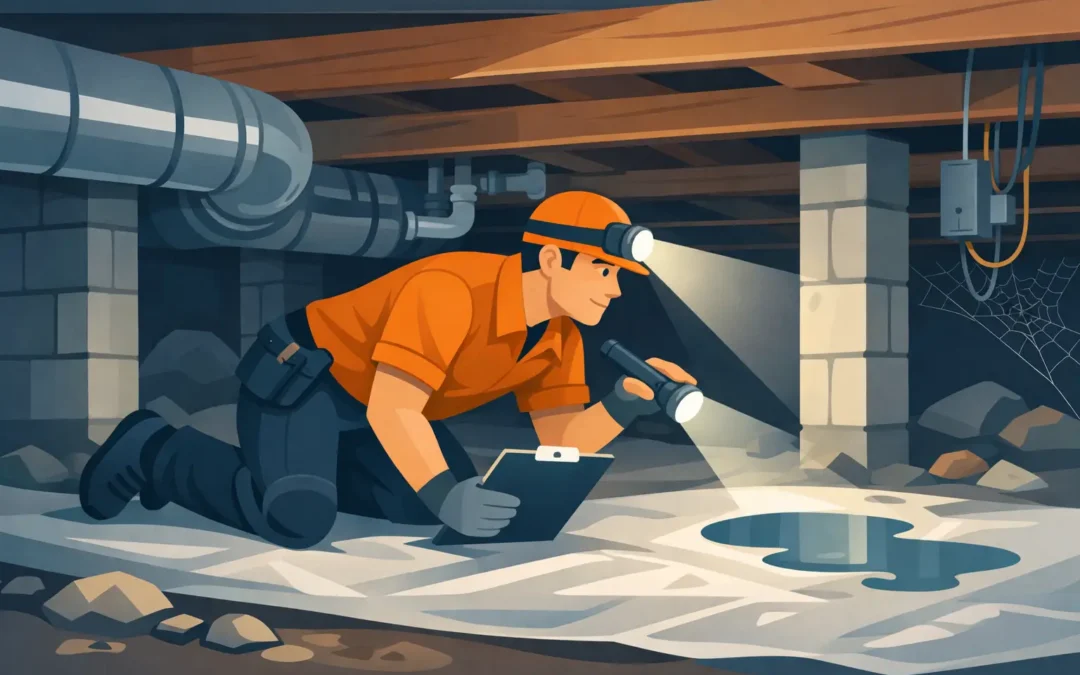
A crawl space can hold some of the most useful clues about a home’s condition. Moisture, drainage problems, pest activity, plumbing leaks, and structural movement often show up below the floor before they become obvious inside the house. Knowing how to inspect a crawl space helps buyers, sellers, and property owners ask better questions and recognize when a concern deserves a closer look.
The goal is not to turn a homeowner into an inspector. It is to make a careful, safe visual review that separates ordinary aging from conditions that may affect the home, its air quality, or a future repair decision.
Start With Safety, Not the Access Door
Before opening a crawl space access panel, decide whether entering is appropriate. A crawl space may be too tight, wet, contaminated, or obstructed for a safe homeowner visit. If you notice standing water, a strong fuel-like or sewer odor, exposed wiring, damaged electrical components, animal remains, or significant mold-like growth near the entrance, stop and arrange a professional evaluation.
Wear clothing you do not mind getting dirty, closed-toe boots with good traction, gloves, eye protection, and a properly fitted mask rated for dusty or mold-prone spaces. Bring a bright flashlight with fresh batteries, not just a phone light. A phone is useful for photos, but its light can leave shadows where details matter.
Tell someone you are entering the crawl space and keep your phone accessible. Move slowly. Crawl spaces often have uneven ground, low overhead clearance, loose insulation, sharp fasteners, and hidden piping. Never enter if you cannot see where you are placing your hands and knees.
How to Inspect a Crawl Space From the Outside First
A good crawl space inspection begins around the foundation. Exterior conditions frequently explain what is happening underneath.
Walk the perimeter and look at the grade, gutters, downspouts, and nearby landscaping. Soil should generally carry water away from the home rather than directing it toward the foundation. Downspouts that end close to the house, low areas that collect runoff, and dense landscaping that traps moisture against the exterior can all contribute to a damp crawl space.
Check visible foundation walls for cracks, staining, deteriorated surfaces, or areas where soil is piled high against the structure. One small crack does not automatically mean there is a major issue. The pattern, width, location, and whether it appears to be changing are what matter. Fresh-looking cracks, displacement, or repeated moisture staining deserve further review.
Also locate the access opening and make sure it is secure. A damaged or poorly fitted access door can allow rain, rodents, and cold air into the crawl space. In Idaho, seasonal moisture and temperature changes can make a properly protected crawl space especially important for the comfort and condition of the home above.
Look for Moisture Before Anything Else
Once you are safely inside, moisture should be your first priority. It is one of the most common causes behind crawl space deterioration and can lead to several other concerns.
Use your flashlight to inspect the soil, vapor barrier, foundation walls, wood framing, insulation, and plumbing. Standing water is the clearest warning sign, but it is not the only one. Look for darkened soil, wet insulation, water droplets on pipes, rusty metal components, white mineral deposits on foundation surfaces, or a musty smell.
A vapor barrier is the plastic material installed over the soil to limit ground moisture. It may be wrinkled or slightly dusty without being a serious problem. However, large tears, missing sections, pooled water beneath the plastic, or an installation that leaves wide areas of exposed soil can allow moisture to continue affecting the space.
Pay attention to where the moisture appears. Water concentrated beneath a bathroom or kitchen may point to a plumbing leak. Moisture near one exterior wall may be related to drainage outside. Dampness throughout the crawl space can have more than one cause, including ground moisture, poor ventilation, or recurring water intrusion. The source matters as much as the symptom.
Examine Wood Framing and Supports
The crawl space gives you a direct view of portions of the home’s structural system, including floor joists, beams, posts, and subflooring. Look along the wood surfaces rather than only at the center of the room. A flashlight held at an angle can make staining, sagging, or surface damage easier to see.
Watch for dark staining, soft or crumbly wood, fungal-looking growth, cracked or split members, and areas that appear noticeably bowed or sagged. Probe nothing with a screwdriver or sharp tool unless you know what you are doing. Damaging a surface can make a minor condition worse and may not tell you why the damage occurred.
Posts and beams should appear stable and properly supported. If you see a leaning post, a beam that has shifted, crushed wood at a support point, or a floor above that visibly sags, document it with photos and request a qualified evaluation. Some settling can be long-standing, while other movement may be active. A visual observation alone cannot always tell the difference.
Check Plumbing, Ducts, and Insulation
Crawl spaces often contain plumbing supply lines, drain pipes, heating ducts, and insulation. These components can affect both the home’s daily operation and the crawl space environment.
Look for dripping water, corrosion around pipe joints, staining below plumbing, loose drain connections, and pipes that are poorly insulated in areas exposed to cold conditions. Even a slow leak can keep the crawl space damp enough to create larger problems over time.
Inspect visible ducts for disconnected sections, torn material, crushed flexible ducts, or loose insulation. A duct that has come apart can waste conditioned air and make rooms above feel less comfortable. Insulation should not be wet, hanging down, compressed against the soil, or heavily soiled by pests. Those conditions reduce its effectiveness and may signal a moisture issue that needs to be addressed first.
Identify Signs of Pests and Mold Concerns
Crawl spaces are attractive to rodents and other pests because they are dark, sheltered, and often undisturbed. Look for droppings, nesting material, gnawed wood, damaged insulation, insect debris, or openings around pipes and foundation penetrations. Avoid touching droppings or disturbed nesting materials, as they can create health concerns.
Mold-like growth often appears where moisture has been present for an extended period. It may look fuzzy, spotty, discolored, or powdery, but appearance alone cannot confirm what type of growth is present. What matters immediately is the moisture source and the extent of the affected area. A small, isolated patch near a past leak may require a different response than widespread growth across framing and insulation.
If there is a persistent musty odor in the home, visible staining on lower walls, or family members notice symptoms that seem worse indoors, a crawl space moisture or mold concern is worth investigating carefully. Summit Inspections can provide clear documentation of visible conditions and help property owners understand practical next steps.
Document What You Find and Know When to Stop
Take clear photos from a few distances: one that shows the overall location, one that shows the affected component, and one close enough to capture the detail. Make notes about where you saw the concern, whether the area was wet or dry, and whether an odor was present. This is particularly useful during a purchase or before listing a property, when observations need to be easy to explain later.
Do not try to repair structural concerns, remove suspected mold, handle damaged wiring, or crawl through a space that becomes too tight to exit safely. A professional crawl space inspection is especially helpful when the area is inaccessible, evidence of moisture is widespread, or you need a clear report to support a property decision.
A clean, dry crawl space is easy to overlook because it is out of sight. Taking the time to check it carefully can bring hidden conditions into the open while there is still time to make informed, confident decisions.