A house can look solid from the driveway and still have serious trouble underneath it. That is why crawl space inspection services matter. When moisture, mold, wood damage, or drainage problems develop below the living area, the warning signs often stay hidden until the repairs become larger, messier, and more expensive to manage.
For buyers, sellers, and property owners, a crawl space is one of those areas that can quietly affect the entire structure. Air quality, flooring performance, insulation, and even the condition of framing can all be influenced by what is happening below the home. A focused inspection gives you a clearer picture of the property so you can make decisions with confidence instead of guessing.
Why crawl spaces deserve closer attention
Crawl spaces tend to be out of sight and easy to ignore. That does not make them low risk. In Idaho, changing seasons, ground moisture, plumbing leaks, and limited ventilation can all create the kind of environment where problems build over time.
A small amount of moisture may not seem urgent at first, but it can lead to wood deterioration, insulation damage, musty odors, and conditions that support mold growth. If the space has standing water, damaged vapor barriers, or signs of pest activity, the effects can spread beyond the crawl space itself. Floors may start to feel uneven. Indoor air may begin to smell stale. Materials that should be dry and stable may no longer be performing as they should.
This is where a professional inspection helps. Instead of relying on surface-level impressions, you get a direct look at one of the most commonly overlooked parts of the property.
What crawl space inspection services typically include
The value of crawl space inspection services is not just that someone goes under the house. It is that the inspection is done methodically, with attention to the conditions that tend to create bigger issues later.
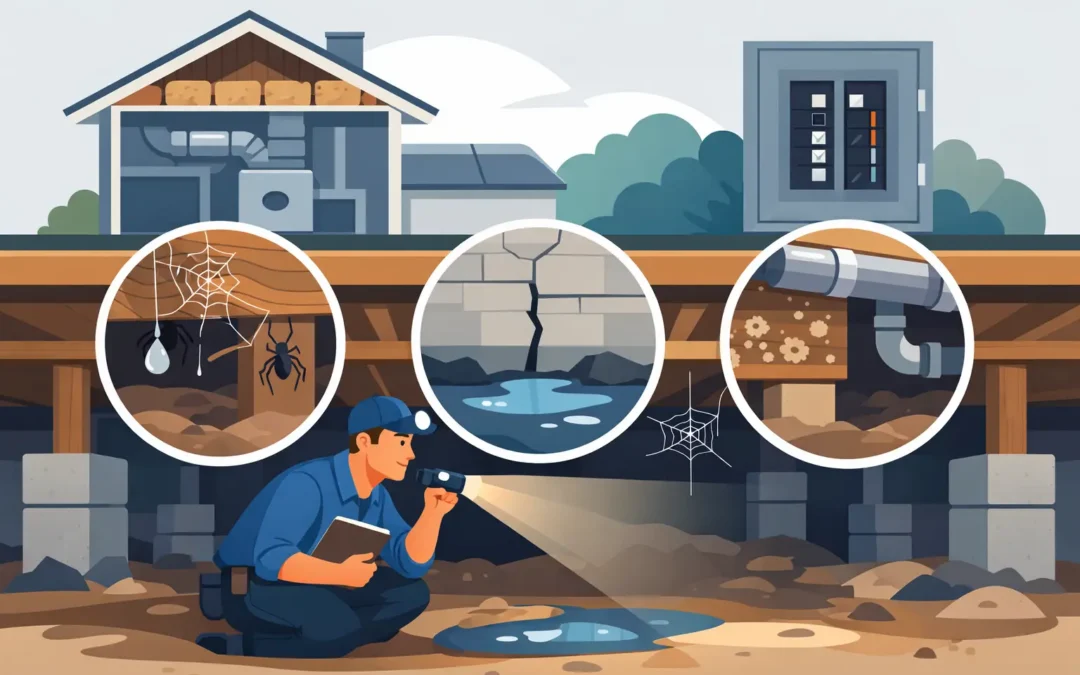
A thorough crawl space inspection usually looks at structural components, moisture conditions, insulation, visible signs of mold, ventilation concerns, and the general condition of accessible materials. Inspectors may document wood damage, sagging insulation, staining, microbial growth, standing water, and signs that the space is not draining or drying as it should.
Plumbing lines and visible mechanical components in the crawl space may also show clues. A slow leak, condensation, or poor insulation around pipes can create ongoing moisture problems that are easy to miss from inside the home. When those conditions are documented clearly, it becomes much easier to understand what needs attention and how urgent it may be.
That said, every crawl space is different. Some are relatively clean and dry, while others are tight, obstructed, or affected by long-term moisture. Accessibility matters. If portions of the space cannot be safely reached or viewed, that should be clearly explained in the report so there are no assumptions about what was or was not visible.
Common problems found during a crawl space inspection
The most common issue is moisture. Sometimes it shows up as damp soil, condensation, or staining. In other cases, there may be standing water, deteriorated insulation, or wood components that have absorbed enough moisture to begin breaking down.
Mold is another concern, especially in spaces with poor airflow or chronic dampness. Not every discoloration is mold, and not every musty smell points to the same cause, which is why documentation matters. A trained inspector can identify visible conditions that warrant attention and help property owners understand when further mold evaluation or remediation may be appropriate.
Wood damage is also frequently discovered in crawl spaces. Joists, beams, and subflooring can all be affected when moisture remains present for long periods. Sometimes the damage is localized around a plumbing leak. Sometimes it reflects a broader environmental issue under the home.
Insulation problems are common too. Insulation may be missing, fallen, compressed, or wet. Even when it is still present, it may no longer be doing its job well. That can affect comfort, efficiency, and moisture control.
There are also times when the crawl space reveals multiple issues tied together. For example, poor drainage may lead to high humidity, which contributes to mold growth, which then affects wood and insulation. Looking at those conditions as part of a whole picture is more useful than treating each symptom as if it appeared on its own.
When a targeted crawl space inspection makes sense
Not every property owner needs a full home inspection every time a concern comes up. Sometimes a focused service is the right fit, especially when there are specific warning signs or a known history involving the crawl space.
If you notice musty odors, uneven floors, cold floors in winter, recurring moisture concerns, or visible mold around lower areas of the home, a crawl space inspection can provide useful answers. It can also make sense before listing a property, after a leak, or when a buyer wants more clarity on a specific issue discovered during a broader inspection.
For investors and owners of older properties, targeted inspections can be especially helpful. Older homes often have longer histories of repairs, moisture exposure, and material wear. A crawl space may tell you a lot about deferred maintenance, prior water intrusion, or the general condition of the structure below the finished living space.
There is also a practical side to timing. Catching a moisture issue early is often far easier than dealing with the aftermath once materials have been damaged over a wider area. The sooner the cause is identified, the more options you usually have.
What a clear inspection report should tell you
A good report should not leave you guessing. It should explain what was observed, where the concern is located, and why it matters in plain language. Photos are especially helpful in crawl space inspections because many clients will never personally enter that area.
That visual documentation can make a big difference during a real estate transaction. Buyers want to understand the condition of the property without sorting through confusing technical language. Sellers want to know what may need attention before a listing or negotiation. Property owners want a straightforward path from concern to action.
Easy-to-read reporting also helps separate minor maintenance items from conditions that deserve quicker follow-up. Not every issue in a crawl space means major structural trouble. Some findings are preventive in nature. Others point to active moisture or damage that should be addressed sooner. Clear reporting helps you tell the difference.
Why professional crawl space inspection services are worth it
A crawl space is not a place where most people can get reliable answers on their own. Limited clearance, dark conditions, moisture, debris, and access challenges all make it difficult to inspect safely and thoroughly without experience.
Professional crawl space inspection services bring more than access. They bring context. It is one thing to spot wet insulation or stained wood. It is another to understand what those signs may indicate, how they relate to the rest of the home, and what kind of next step makes sense.
That is especially important when you are in the middle of a purchase, preparing to sell, or trying to protect a property you already own. Reliable information helps you move forward with less uncertainty. It also helps keep small hidden issues from turning into bigger surprises later.
At Summit Inspections, that means a practical, customer-first approach – clear communication, detailed findings, and reports that are easy to understand and act on. The goal is not to overwhelm you. It is to give you a dependable assessment of the space beneath the property so you can make informed decisions with confidence.
If there is one part of a home that should not be ignored just because it is hard to see, it is the crawl space. A closer look underneath can save a lot of second-guessing above it.