A house can look spotless at showing time and still have problems hiding in plain sight. Fresh paint, staged furniture, and a clean kitchen do not tell you much about the condition of the roof, crawl space, wiring, or moisture levels. That is why buyers and sellers often want to understand what inspectors look for before the inspection day arrives.
The short answer is this: inspectors look for the overall condition of the property, with close attention to the major systems and the warning signs that suggest damage, wear, deferred maintenance, or safety concerns. The goal is not to nitpick cosmetic flaws. It is to give you a clear picture of how the property is performing and where issues may need attention.
What inspectors look for first
Most inspections start with the big picture. Before getting deep into details, an inspector is looking at how the home has held up over time and whether there are visible signs of movement, moisture, damage, or neglected maintenance. Patterns matter more than any one stain, crack, or loose handle.
A small crack in drywall may be minor by itself. A small crack plus uneven floors, sticking doors, and signs of foundation movement tells a different story. That is the value of a thorough inspection. It connects the dots.
Inspectors also pay attention to accessibility. If an attic hatch is blocked, a crawl space is unsafe to enter, or stored items prevent access to key components, that limits what can be observed. That does not automatically mean something is wrong, but it can mean there are unanswered questions.
Roof, exterior, and drainage
One of the first major areas under review is the exterior shell of the home. The roof, siding, windows, doors, flashing, and trim all work together to keep water out. When they are failing, moisture usually finds a way in.
Roof coverings are checked for signs of wear, missing or damaged materials, exposed fasteners, soft spots, and aging. Inspectors are also watching for clues that drainage may be sending water where it should not go. Gutters, downspouts, grading, and drainage paths matter because water around the home can lead to foundation concerns, crawl space moisture, and interior damage.
This is one area where appearances can be misleading. A roof may look acceptable from the ground but still show problems up close, especially around penetrations, valleys, or transitions. The same goes for exterior walls. A clean finish does not rule out swelling, gaps, staining, or deterioration.
Why water management gets so much attention
Water is behind many of the issues found during inspections. It can damage framing, shorten the life of finishes, contribute to mold growth, and create ongoing problems that spread slowly over time. That is why inspectors spend so much effort looking at where water comes from, where it goes, and whether the home is handling it properly.
Structure and visible movement
Inspectors look at the structure for signs that the home is settling normally or moving in ways that deserve closer attention. This includes the foundation, framing, floors, walls, ceilings, and support components where visible.
Not every crack means a major problem. Homes shift over time, and some minor movement is common. What raises concern is the pattern, size, location, and combination of symptoms. Sloping floors, separated trim, significant wall cracks, or doors that no longer close properly can point to a larger issue.
In basements and crawl spaces, inspectors often look for moisture staining, wood damage, standing water, insulation concerns, and support conditions. These areas tend to reveal problems that are easy to miss during a regular walk-through.
Plumbing system condition
Plumbing is another major focus because hidden leaks can cause a lot of damage before anyone notices. Inspectors check visible supply lines, drain lines, fixtures, water heaters, and signs of active or past leakage.
They are not just looking for dripping faucets. They are paying attention to water pressure, fixture function, drainage behavior, corrosion, loose toilets, staining under sinks, and signs that repairs have been made or may still be needed. Around water heaters, they look at general condition, visible connections, venting when applicable, and any signs of rust or leakage.
A home can have plumbing that works fine during a quick showing but still show warning signs during a more careful inspection. Slow drains, patched piping, or moisture under cabinets may not stop a sale, but they can affect negotiations, repair planning, and peace of mind.
Electrical components and safety concerns
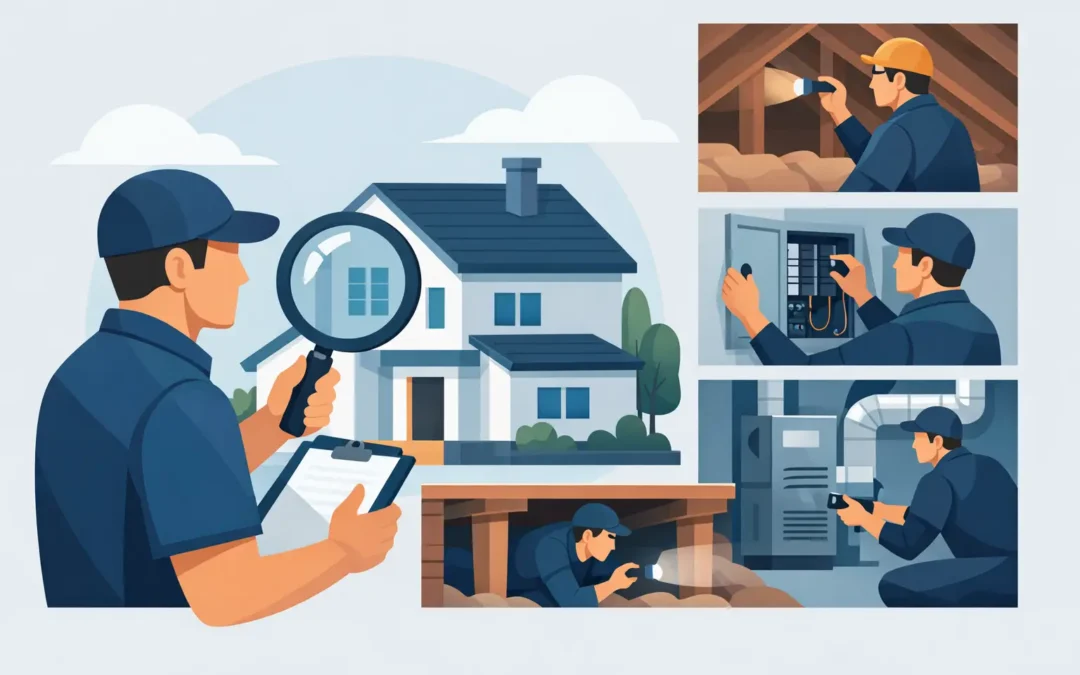
Electrical issues are a common source of concern because they can affect both function and safety. Inspectors review the service panel, visible wiring, outlets, switches, fixtures, and installed safety features where present.
The concern is not just whether the lights turn on. Inspectors are looking for signs of amateur repairs, improper connections, damaged components, missing covers, double-tapped breakers, overheating clues, and outdated or unsafe conditions. In lived-in homes, this part matters because electrical problems often stay hidden until someone takes a closer look.
This is also an area where clear reporting helps. Many clients are not interested in the technical side. They want to know what is working, what appears unsafe, and what should be evaluated or corrected.
Heating, cooling, and ventilation
The HVAC system gets attention because comfort is only part of the story. Inspectors are looking at visible condition, operational response, airflow, and signs that a system may be aging or not performing as expected.
Furnaces, air conditioning units, ducts, filters, vents, and exhaust systems all play a role. A unit may run during the inspection and still show indicators of deferred maintenance or reduced remaining life. That does not always mean immediate replacement is needed. It may simply mean the system deserves budgeting and closer monitoring.
Ventilation is just as important. Bathrooms, kitchens, attics, and crawl spaces need to move moisture out appropriately. Poor ventilation can contribute to condensation, insulation problems, wood damage, and mold concerns.
Attics, crawl spaces, and hidden trouble spots
If there is one part of the home that often answers bigger questions, it is the spaces most people do not want to enter. Attics and crawl spaces can reveal roof leaks, past repairs, insulation gaps, pest activity, moisture intrusion, and ventilation issues.
These areas matter because they show the underside of the home’s performance. You may not see a leak stain on the living room ceiling yet, but the attic may already tell the story. The same goes for crawl spaces. They often reveal whether drainage is doing its job and whether the home has ongoing moisture exposure below.
For Idaho properties, seasonal weather changes can make these areas especially important. A home may feel dry and stable at the time of showing while hidden spaces tell a longer-term story.
Interior surfaces and signs of moisture
Inside the home, inspectors are looking beyond finish quality. They check walls, ceilings, floors, windows, and doors for clues. Stains, soft spots, warped materials, peeling finishes, and musty odors can all point to moisture or previous damage.
Windows and doors are also useful indicators. If several are sticking, out of square, or showing damage around the frames, that can suggest movement or water intrusion. Again, the goal is not to call out every minor imperfection. It is to identify patterns that help clients make informed decisions.
What inspectors look for when mold is a concern
When there is visible growth, a persistent musty smell, or a history of water problems, mold may become part of the inspection conversation. Inspectors look for the conditions that support mold, especially moisture, humidity, poor ventilation, and water intrusion.
Mold concerns are rarely about one dark spot alone. The bigger question is why the environment allowed growth in the first place. If the source is not addressed, cleanup by itself may not solve the problem.
What an inspection does and does not tell you
A good inspection gives you a practical snapshot of the property’s condition on the day it is inspected. It helps buyers understand risk, helps sellers identify issues before listing, and helps owners prioritize maintenance. It can also bring peace of mind when the major systems appear solid.
That said, every inspection has limits. Inspectors evaluate what is visible and accessible at the time. Furniture, finishes, storage, weather, and safety conditions can all affect what can be seen. Some problems only show up under certain conditions, and some areas simply cannot be fully assessed without invasive work.
That is why clear communication matters as much as the inspection itself. A report should explain the findings in plain language, identify what deserves attention, and help you separate routine maintenance from more significant concerns.
When clients work with Summit Inspections, that clarity is a big part of the value. People are not just looking for a checklist. They want a dependable explanation of what the property is saying before they make a decision.
If you are preparing for an inspection, the most useful mindset is simple: do not focus on whether the house is perfect. Focus on understanding its condition, its risks, and its next steps. That is what makes an inspection worth having.