A house can look well cared for from the driveway and still have a story waiting above the ceiling. An attic inspection for homebuyers helps bring that story into view before you are committed to the property. This often-overlooked space can show early signs of roof leaks, moisture problems, insulation gaps, ventilation issues, pest activity, and past repairs that may not be visible anywhere else.
For Idaho buyers, the attic deserves real attention. Our changing seasons, snow loads, cold winters, and summer heat can expose weaknesses in a roof system and make small air or moisture issues more noticeable over time. A thorough look overhead does not mean every attic finding is a deal-breaker. It means you can understand the home’s condition, ask better questions, and make decisions with fewer surprises.
Why an attic inspection for homebuyers matters
The attic sits between the living space and the roof, so it records what is happening on both sides. Water entering through a roof opening may stain sheathing or framing before it reaches a bedroom ceiling. Warm indoor air escaping into a cold attic can create condensation long before a homeowner notices a comfort problem. Poor ventilation can contribute to excessive heat, trapped moisture, and shortened roof material life.
Some findings are straightforward, such as a visible water stain or an area of damaged insulation. Others require context. A stain may be old and dry, or it may point to an active leak. Darkened wood may be surface discoloration, or it may be related to elevated moisture. The value of a professional inspection is not simply spotting a condition. It is explaining what is visible, how urgent it appears, and what follow-up may be appropriate.
An attic also gives buyers a useful view of maintenance history. Clean, dry framing and consistently installed insulation can suggest that the space has been cared for. Patchwork repairs, stored belongings blocking access, or evidence of repeated moisture may warrant a closer look. The goal is a clear condition assessment, not unnecessary alarm.
What a thorough attic inspection should look for
A complete home inspection typically includes accessible attic areas, but accessibility matters. Some attics have a safe pull-down stair or walkable access. Others have a small hatch, limited clearance, or areas that cannot be safely entered without causing damage. An inspector should evaluate what is accessible and document limitations clearly, rather than making assumptions about areas that cannot be viewed.
Roof framing and sheathing
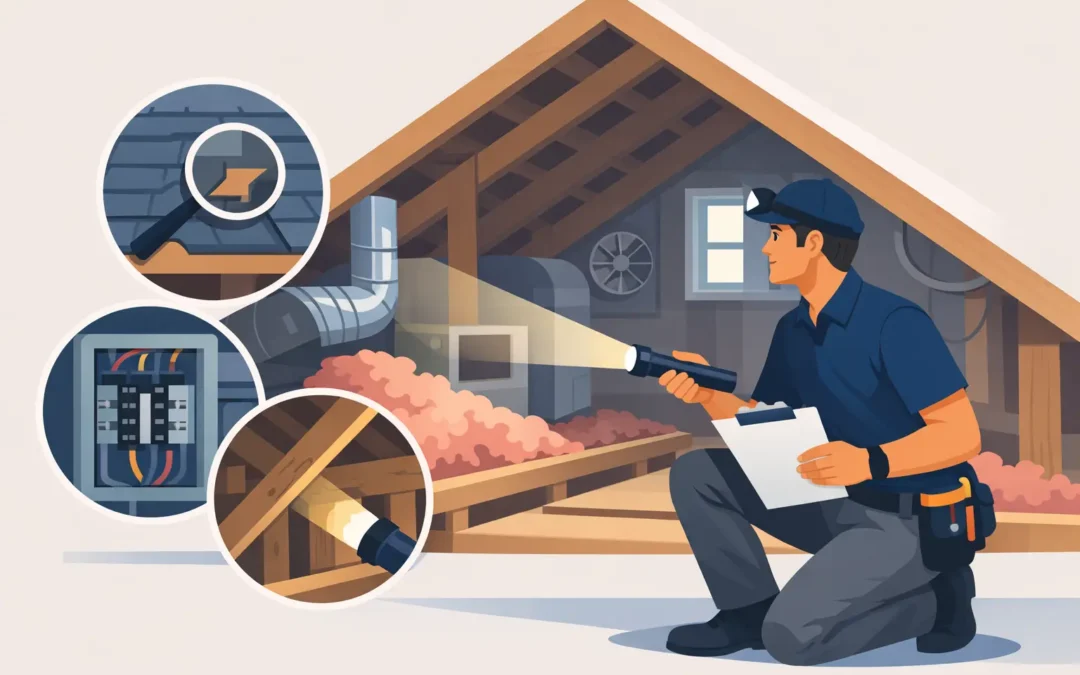
From inside the attic, an inspector can observe portions of the roof structure that are hidden from the exterior. They look for sagging, cracked, split, altered, or damaged framing where visible. They also check roof sheathing for water staining, deterioration, daylight at unintended openings, and signs that prior leaks may have affected the material.
A small amount of staining does not automatically mean the roof needs immediate replacement. The key questions are whether the material is dry, whether the source appears active, and whether there is damage that affects performance. A qualified roofing professional may be the right next step when the inspection identifies conditions that need more specialized evaluation.
Moisture, leaks, and possible mold conditions
Moisture is one of the most meaningful attic findings because it can affect wood, insulation, indoor air quality, and the overall health of the home. Inspectors watch for stains, wet materials, condensation, rusted fasteners, damp insulation, and organic growth-like conditions. They also consider common causes, including roof leaks, plumbing vent penetrations, bathroom exhaust discharge, and air leakage from the living space below.
Not every dark spot is mold, and visual observations alone do not identify a specific material. When conditions raise concern, further mold evaluation or testing may help provide a clearer answer. This is particularly helpful for buyers who are sensitive to moisture-related concerns or who want to understand the scope of a visible issue before moving ahead.
Insulation and air leakage
Insulation affects comfort, energy use, and how hard the heating and cooling systems must work. During an attic inspection, the inspector looks at the type, general distribution, and visible condition of insulation. Thin, uneven, compressed, or disturbed insulation can leave rooms below more vulnerable to drafts and temperature swings.
The attic may also reveal signs of air leakage from the home. Openings around fixtures, ducts, plumbing penetrations, and attic hatches can allow warm indoor air to enter the attic during winter. That is more than an efficiency concern. In the right conditions, escaping air can contribute to condensation on colder surfaces.
Buyers should view insulation improvements as a practical planning item rather than a reason to panic. The right next step depends on the home’s age, the existing material, the layout, and whether moisture issues must be addressed first.
Ventilation and exhaust connections
Attic ventilation helps manage heat and moisture, but it works best when the system is balanced and unobstructed. An inspector may observe intake openings near the roof edge, exhaust openings higher on the roof, blocked vents, or signs that insulation is restricting airflow. The attic’s layout and roof design can affect what is visible and how well ventilation performs.
Bathroom and laundry exhaust ducts deserve attention as well. These ducts should direct moist air outside, not release it into the attic. A loose, disconnected, or improperly terminated duct can create localized moisture problems, especially during colder months. This is often a repairable issue, but it should be addressed before it leads to more significant damage.
Pests, electrical concerns, and stored materials
Attics can provide clues about unwanted animal or insect activity. Droppings, nesting material, chewed insulation, damaged ductwork, or openings near the roofline may indicate that pests have entered the space. The inspection report can help identify what was observed so buyers can determine whether pest evaluation or repairs are needed.
Visible electrical components are also reviewed for readily apparent concerns, such as exposed wiring, open junction boxes, or damaged conductors. Attics are not storage spaces by default, particularly when stored materials obstruct access or rest on insulation in ways that can hide conditions below. A crowded attic can limit what an inspector can see, and that limitation should be noted in the report.
How to use attic findings during the buying process
The best inspection report does more than create a long list. It helps you separate conditions that need prompt attention from routine maintenance and future improvements. A small insulation upgrade, for example, calls for a different response than active moisture on roof sheathing.
When attic issues appear in your report, start by asking three practical questions: Is the condition active? What could happen if it is left alone? What type of qualified professional should evaluate or repair it? Those answers help you focus on the findings that truly affect your decision and avoid getting lost in technical language.
For a first-time buyer, this can be especially reassuring. No home is perfect, including a newer home. The objective is to know what you are buying and have a realistic plan for the property after closing. For investors and experienced buyers, attic findings can also help shape due diligence around repair timing, moisture risks, and longer-term maintenance needs.
What to expect from the inspection report
A useful report should describe the attic conditions in plain language and support significant findings with clear photos when possible. You should be able to identify the concern, understand the general location, and see whether follow-up is recommended. A summary page can make it easier to review priority items while still giving you the detail needed for conversations with your agent or repair professionals.
At Summit Inspections, the focus is on providing a clear, full-color report and explaining findings in a way that makes sense. You do not need to become an attic expert during a real estate transaction. You need dependable information, honest context, and time to ask questions.
If an attic is inaccessible, treat that as information too. A limited inspection does not prove that conditions are present, but it also cannot rule them out. In some situations, arranging access or requesting a focused follow-up inspection can be worthwhile before your inspection period ends.
A quiet attic can hold some of the most useful clues about a home. Giving it proper attention now can help you step into your next home with clearer expectations and a more confident plan for what comes next.