
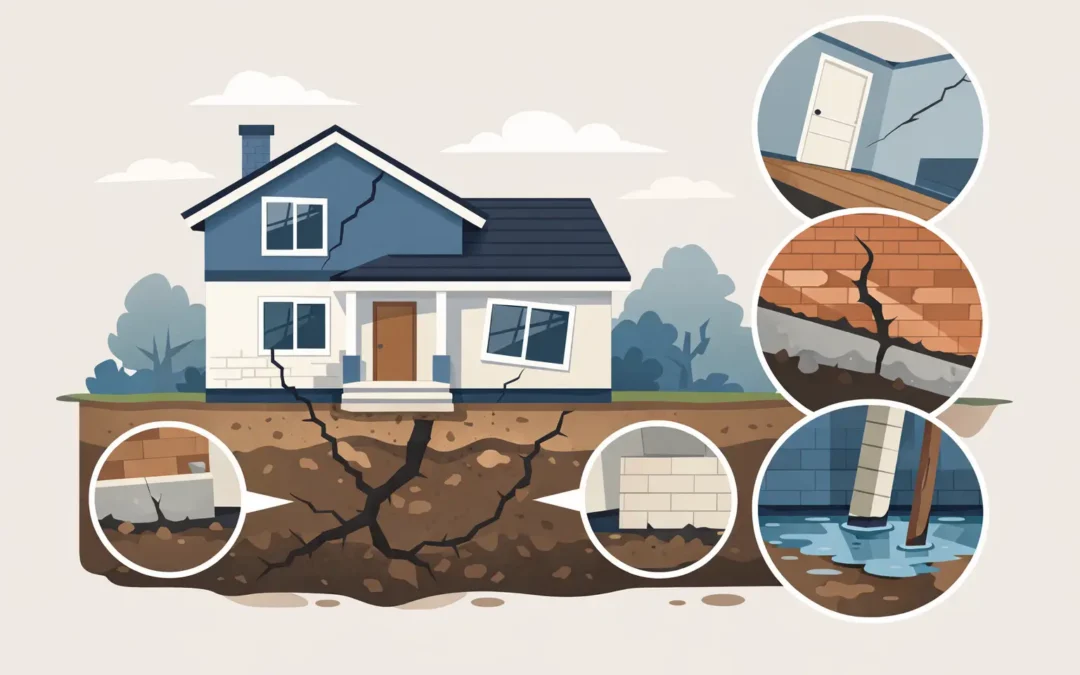
A sticking bedroom door after a wet spring may be nothing more than seasonal swelling. A stair-step crack in masonry, paired with a door that suddenly will not latch, deserves a closer look. The signs of foundation movement are rarely one dramatic event. More often, they are a pattern of small changes that can affect a buyer’s confidence, a seller’s timeline, or an owner’s plans for a property.
Foundation movement does not automatically mean a home is unsafe or headed for a major repair. Homes settle, materials expand and contract, and Idaho’s changing moisture and temperature conditions can affect soil and building components. The key is separating ordinary wear from changes that may point to active or uneven movement.
What Foundation Movement Means
A foundation is designed to carry the weight of a structure and transfer that load to the soil below. Movement occurs when the ground, drainage conditions, moisture levels, construction materials, or structural loads change enough to affect that support.
Some movement happens gradually over many years and may leave only cosmetic evidence. Other movement can be more significant, especially when different areas of a home settle or shift at different rates. That uneven change can show up in walls, floors, trim, masonry, plumbing connections, and exterior finishes.
No single crack, gap, or sticking door can confirm the cause by itself. A thorough inspection looks at the location, direction, size, condition, and surrounding evidence before identifying whether further evaluation is appropriate.
9 Signs of Foundation Movement to Watch For
1. Cracks that follow a concerning pattern
Small hairline cracks in drywall are common, particularly around doors and windows. Cracks become more concerning when they are wide, diagonal, recurring after repair, or found alongside other changes in the home.
Watch for cracks that run from the corner of a door or window opening toward the ceiling or floor. On brick or block surfaces, a stair-step pattern can indicate movement that should be documented and evaluated in context.
2. Doors or windows that stick or no longer latch
A door that rubs its frame can result from humidity, loose hinges, or normal seasonal changes. It is more meaningful when multiple doors or windows in the same area begin sticking, gaps around frames become uneven, or a door no longer latches without force.
During an inspection, the pattern matters. One affected interior door may have a simple explanation. Several affected openings, especially when combined with wall cracking or uneven floors, can suggest a broader issue worth investigating.
3. Sloping, dipping, or uneven floors
Floors are not always perfectly level, particularly in older homes. What matters is whether the floor feels noticeably sloped, has a localized dip, or appears to have changed over time.
A floor issue can originate in the foundation, framing, crawl space supports, moisture damage, or past alterations. That is why a visual assessment of accessible areas below the floor can be so useful. The goal is to identify what is visible and determine whether the condition calls for a more specialized opinion.
4. Gaps between walls, ceilings, and trim
Separation at baseboards, crown molding, cabinets, or wall-to-ceiling joints can occur as a house ages. New or widening gaps deserve attention, especially if they appear near other cracks or around exterior walls.
Look closely at built-in cabinets and countertops as well. A gap that develops where cabinetry meets a wall, or a countertop that separates from a backsplash, may reflect movement in the surrounding structure. It can also be related to installation details, so it should not be treated as proof on its own.
5. Cracks in the foundation or masonry
Visible cracks in a concrete foundation should be noted, but their appearance matters. Fine vertical cracks can occur as concrete cures and ages. Horizontal cracking, displacement from one side of a crack to the other, or cracks that appear to be widening may indicate more pressure or movement.
Masonry veneer can show similar clues. Cracked mortar, separated sections, and stair-step cracks should be reviewed along with drainage, grading, wall condition, and signs inside the home.
6. Exterior walls that look bowed or out of line
Stand back from the house and look along the exterior walls. A wall that appears bowed, bulged, leaning, or noticeably out of plane is not a condition to ignore. The cause may involve framing, settlement, moisture intrusion, or soil pressure against below-grade walls.
This is one of the clearer situations where a property inspection can help document visible conditions and point you toward the right next step. If structural concerns are present, further evaluation by a qualified structural professional may be recommended.
7. Cracks or separation around porches, patios, and chimneys
Exterior features can move independently from the main structure. A concrete patio may settle without affecting the home’s foundation, while a porch that pulls away from the house can have a different cause altogether.
Pay close attention to a chimney that appears to lean, separate from siding or brickwork, or develop cracking near its connection to the home. Because chimneys are heavy and often supported differently than the main structure, visible changes should be assessed promptly.
8. Moisture, poor drainage, or soil changes near the home
Water management does not cause every foundation concern, but it is often part of the conversation. Downspouts that discharge next to the foundation, soil that slopes toward the house, standing water, and persistent dampness in a crawl space can affect the conditions around supporting soils and structural materials.
In Idaho, freeze-thaw cycles and seasonal moisture changes can add another layer. Dry soil, saturated soil, runoff, and snowmelt can all influence how water behaves around a property. Correcting drainage concerns may help prevent worsening conditions, but the right approach depends on what is actually happening at the site.
9. Cracked finishes paired with plumbing or crawl space concerns
Foundation movement can place stress on plumbing lines, but a leak can also create moisture conditions that affect materials below a home. If cracking is accompanied by unexplained dampness, musty odors, water stains, a wet crawl space, or changes in plumbing performance, it is wise to look at the full picture.
Mold growth is another reason not to delay attention to persistent moisture. The visible crack may be the item that catches your eye, while the more urgent concern is water entering or collecting where it should not.
When a Crack Is Usually Less Urgent
Not every imperfection requires alarm. A single stable hairline drywall crack, a minor gap in older trim, or one sticky door during a humid period may be cosmetic or seasonal. Fresh paint can also make small pre-existing cracks more noticeable.
Still, it is smart to take photos, note the date, and monitor the area. If a crack lengthens, widens, returns after repair, or appears with new symptoms, you will have a clearer record of the change. For buyers, visible conditions should be included in the inspection conversation before contingency deadlines pass. For sellers, documenting concerns early can reduce last-minute surprises.
What a Property Inspection Can and Cannot Tell You
A home inspection provides a practical visual assessment of accessible areas. It can identify signs that may be consistent with foundation movement, document related concerns such as moisture or drainage, and explain what findings mean for your next decision.
It is not a substitute for an invasive investigation or an engineering analysis. When conditions suggest a structural issue, an inspector may recommend further evaluation from an appropriately qualified specialist. That recommendation is not a diagnosis of a major problem. It is a way to make sure a high-stakes question receives the level of review it deserves.
For a home with a crawl space, a focused crawl space inspection can be especially helpful. Accessible supports, floor framing, moisture conditions, insulation, vapor barriers, and visible foundation walls can provide context that is not available from the living area alone.
A Clear Next Step for Idaho Property Owners
If you notice several signs at once, do not rely on a quick patch or assume the issue is purely cosmetic. Record what you see, watch for changes, and arrange a thorough assessment of the property. Summit Inspections helps buyers, sellers, and owners understand visible conditions in plain language, with clear reporting that supports informed decisions.
A home does not need to be perfect to be a sound purchase or a successful sale. What matters is knowing which conditions are routine, which deserve monitoring, and which call for further evaluation before they become a larger question.